
Phuong Tran
Psychotherapist & Counsellor Melbourne
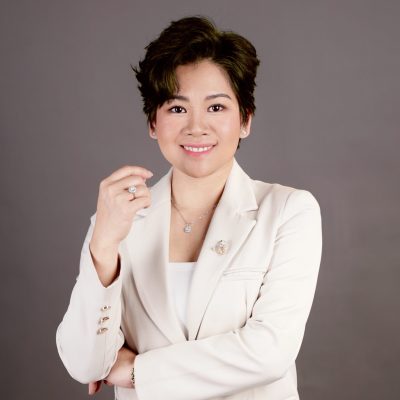
Psychotherapist • PACFA Registered Clinical Counsellor • EMDR Therapist • Clinical Supervisor
I’m Phuong (Teresa) Tran, a psychotherapist and registered counsellor based in Melbourne.
I provide counselling, psychotherapy and EMDR therapy for individuals, as well as clinical supervision within my professional scope of practice. Appointments are available in person in St Albans and by telehealth, in English and Vietnamese.
My professional experience spans more than 16 years across psychology, counselling, psychotherapy, mental health, healthcare, education, psycho-oncology, palliative and hospice care, clinical supervision and spiritual care.
Before moving to Australia, I worked as a psychologist in Vietnam for more than 12 years. That experience, together with my later work and professional development, has shaped the way I practise today.
I have come to see that emotional difficulties rarely exist in isolation. Relationships, family, culture, health, past experiences, trauma, identity, loss and life circumstances can all influence how we experience and respond to what is happening in our lives.
For me, therapy begins by taking time to understand the person before deciding what approach may be helpful.
How I work
My approach is person-centred, trauma-informed, evidence-informed and integrative, with attention to neurodiversity and individual differences.
I do not assume that one therapeutic method will be right for everyone.
Therapy begins with careful listening and a respectful, collaborative relationship. Together, we explore what has been happening, what may be contributing to the difficulty, the strengths and resources you already have, what matters to you, and what you would like to understand or change.
Where trauma is relevant, we work with attention to safety, choice, pacing and readiness.
Depending on your needs, goals and circumstances, our work may draw on approaches including EMDR Therapy, Schema Therapy, Cognitive Behavioural Therapy (CBT), Acceptance and Commitment Therapy (ACT), DBT-informed practice, mindfulness-based approaches, Solution-Focused Therapy, Emotion-Focused approaches and systemic perspectives.
Different approaches may be useful at different stages of therapy. Rather than fitting you into a particular model, we can consider together which ways of working may be appropriate and meaningful for you as therapy develops.
Areas I work with
People come to therapy for many different reasons. Some have a clear concern they would like support with, while others simply know that something has become difficult or no longer feels manageable.
You do not need to know exactly how to describe what you are experiencing before making contact.
My work includes supporting people with concerns related to:
- Trauma and post-traumatic stress
- Anxiety, stress and emotional difficulties
- Relationship and family concerns
- Grief, loss and major life transitions
- Culture, migration and identity
- Chronic illness and chronic pain
- The emotional impact of cancer and life-limiting illness
- Emotional, relational and existential concerns associated with palliative and hospice care
- Caregiving and family adjustment
- Spiritual and existential concerns
Sometimes one concern is at the centre of what brings you to therapy. At other times, several areas of life may be affecting one another.
We can begin with what is happening for you now.
Illness, grief and significant life changes
My professional experience includes psycho-oncology, palliative and hospice care.
Living with cancer, chronic illness, persistent pain or life-limiting illness can affect much more than physical health. It may also affect relationships, independence, identity, family roles, work, future plans and a person’s sense of meaning.
These experiences can also have a significant impact on partners, family members and caregivers.
Not every difficult circumstance can simply be solved.
Sometimes therapeutic work involves change. Sometimes it involves adjustment, understanding or making space for grief and uncertainty. At other times, what matters most may be having somewhere to speak honestly about experiences that are difficult to discuss elsewhere.
Trauma and EMDR therapy
My work includes supporting people affected by trauma and experiences from the past that may still be influencing life in the present.
Trauma does not affect everyone in the same way. Some people experience distressing memories or clear triggers. Others may notice anxiety, emotional overwhelm, avoidance, physical reactions, relationship difficulties or patterns that are harder to understand.
Where appropriate, EMDR therapy may be considered as part of the work.
I do not automatically recommend EMDR simply because someone has experienced trauma. We first consider your history, current circumstances, goals, resources and readiness, and then decide together whether EMDR may be appropriate.
EMDR is one therapeutic approach. It is not the whole therapeutic relationship.
Professional registration and development
I am currently a:
PACFA Registered Clinical Counsellor
ACA Level 4 Registered Counsellor
ACA Registered Supervisor
My education and ongoing professional development include counselling, psychotherapy, psychology, mental health, trauma therapy, EMDR, clinical supervision, psycho-oncology, grief and loss, palliative and hospice care, clinical pastoral education and related areas of therapeutic practice.
I continue to undertake professional supervision and professional development as part of maintaining ethical, thoughtful and responsive practice.
Working across language and culture
I work in both English and Vietnamese, with Vietnamese as my first language.
Language can influence how we understand and express emotions, relationships, family expectations, identity and belonging. Some experiences may be easier to describe in one language than another, while at other times it may feel natural to move between both.
In individual counselling and psychotherapy, you are welcome to speak in English, Vietnamese, or use both in a way that helps you express yourself more fully.
In couple and family work, it is important that everyone can understand what is being discussed and participate meaningfully. Where everyone is comfortable using the same language, sessions can take place in that shared language.
Where differences in language proficiency may limit a person’s understanding or participation, an appropriately qualified interpreter may be recommended. If an interpreter is involved, this would be discussed beforehand so that consent, confidentiality, the interpreter’s role and practical arrangements are clear.
The aim is to support fair, respectful and meaningful participation for everyone involved.
Trong tham vấn và trị liệu cá nhân, bạn có thể chia sẻ bằng tiếng Việt, tiếng Anh, hoặc linh hoạt sử dụng cả hai ngôn ngữ theo cách tự nhiên và phù hợp với bạn.
Culture can also shape the way we understand wellbeing, relationships, family roles, responsibility, distress, help-seeking and change.
Rather than assuming that one way of understanding wellbeing applies to everyone, I remain attentive to the cultural, relational, social and linguistic context in which each person lives.

Clinical supervision
Alongside my therapeutic work, I provide individual and group clinical supervision within my professional scope of practice.
As an ACA Registered Supervisor, I approach supervision as a collaborative and reflective professional process.
Supervision may include clinical work, ethical considerations, therapeutic relationships, cultural context, professional boundaries, practitioner wellbeing and ongoing professional development.
Training
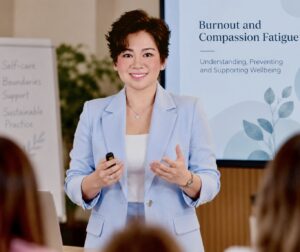
I provide professional education and training informed by my experience across counselling, psychotherapy, mental health, healthcare, education and supervision.
My aim is to connect professional knowledge with practical application, ethical awareness and reflective practice.

Spiritual care
For some people, questions about meaning, purpose, faith, spirituality, suffering or mortality become important during difficult periods of life.
Where these concerns matter to you, they can be explored respectfully alongside psychological, relational, cultural and practical aspects of your experience.
You do not need to hold a particular religious or spiritual belief to discuss these questions.
Finding the right fit
Choosing a therapist/counsellor is a personal decision.
Qualifications and experience matter, but so does how you feel in the conversation — whether you feel listened to, respected, and able to be yourself.
You do not need to know exactly what kind of therapy you need before getting in touch, and you do not need to have everything worked out before the first session.
We can begin with what is happening for you now, what you are hoping for, and whether my way of working feels like a good fit for you.
If you are unsure about booking, I offer a brief 10-minute phone conversation. It is simply a chance to ask a few questions, tell me a little about what you are looking for, and get a sense of whether it may feel right to work together.
There is no pressure to book afterwards.
